
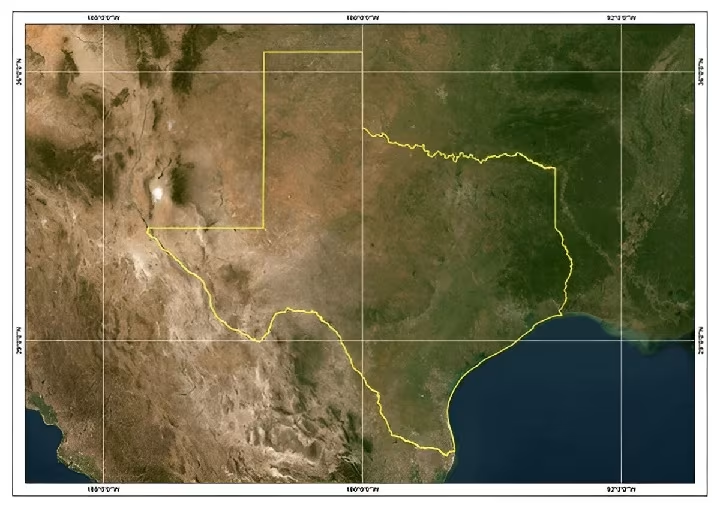
Introduction
Lands of Texas by County: When you look for lands of Texas through county, you’re not honestly seeking out numbers on a map — you’re in search of to healthy purpose with vicinity. Texas is substantial and wildly numerous: sandy coastal marshes, rolling Hill Country, dense East Texas pine forests, and huge barren area plains within the west. Each county tells a selected tale approximately land use, price, water availability, and development strain. This manual allows customers, buyers, and curious readers understand how to evaluate land county thru county and make alternatives that healthful real dreams: farming, ranching, enterprise, improvement, or conservation.
| Feature | Details |
|---|---|
| Location | South-Central region of the United States; borders New Mexico (west), Oklahoma (north), Arkansas (northeast), Louisiana (east), and Mexico (southwest); Gulf of Mexico coastline (southeast). |
| Latitude / Longitude | Approx. 25°50′ N to 36°30′ N / 93°30′ W to 106°40′ W |
| State Capital | Austin |
| Largest City | Houston |
| Total Area | About 268,596 square miles (695,662 km²) |
| Land Area | About 261,232 square miles (676,587 km²) |
| Water Area | About 7,365 square miles (19,075 km²), ~2.7 % of total area |
| Population (2024 est.) | ~30 million people |
| Population Density | ~117 people per square mile (varies widely by county) |
| Number of Counties | 254 counties (largest number of any U.S. state) |
| Highest Point | Guadalupe Peak – 8,751 ft (2,667 m) above sea level |
| Major Rivers | Rio Grande, Red River, Sabine River, Brazos River, Colorado River (Texas), Trinity River |
| Climate Zones | Ranges from humid subtropical in east to semi-arid and arid in west |
| Main Land Uses | Agriculture (cattle, cotton, hay), energy (oil, gas, wind), urban development, forests, recreation |
| GDP Rank | 2nd largest state economy in the U.S. |
Why “lands of Texas via using county” topics
Thinking county-first offers you practical blessings:
- Context: County obstacles define assets tax rules, school districts, and nearby allowing—subjects that affect fee and use.
- Comparability: Comparing counties permits separate marketplace hype from actual fee.
- Planning: County-degree insight exhibits whether or not an area is probable to look growth, infrastructure funding, or conservation restrictions.
When you compare lands of Texas via county, you’re selecting not only a parcel, however a felony and social environment which will shape what you could do with that parcel for years to come.
Overview: Texas land areas and what they imply for county comparisons
Rather than a unmarried statewide rule, land in Texas behaves locally. Below are large regions and what they commonly mean for county-degree land:
- Far West Texas and Trans-Pecos: Very large counties, sparse populace, low fee land in lots of places, however restrained water and infrastructure. Ideal for some distance off searching ranches, solar initiatives, or massive low-charge tracts.
- Panhandle & High Plains: Wide open, agricultural and ranching counties dominate. Wind electricity and irrigation form fee in components of this place.
- North Texas & Prairies: Counties near Dallas–Fort Worth may be in transition from rural to suburban; proximity to interstates topics plenty.
- Hill Country & Central Texas: Scenic, suitable for undertaking and 2nd homes. Counties proper right here frequently see development pressure and better consistent with-acre values.
- Gulf Coast & Brazos Bottom: Productive land plus flood threat in some counties; proximity to ports can enhance commercial charge.
- East Texas Pineywoods: Forested counties with wood, looking rentals, and a combination of small family farms.
- South Texas: Ranching, brush u . S ., and a few irrigated agriculture; climate and water rights are key concerns.
Each of these vast regions consists of many counties — and interior each county, micromarkets depend: a ranch close to a county avenue and a nicely may be priced otherwise than a long way off acreage and not the usage of a get right of entry to.
How to evaluate lands of Texas through county — a practical tick list
When you’re evaluating counties, use this checklist to build up everyday statistics:
- Land location and parcel sizes: How not unusual are 5-acre, 50-acre, and 500-acre parcels within the county? Counties with a lifestyle of large ranches may have specific pricing dynamics than people with subdivided tracts.
- Primary land makes use of: Are maximum parcels used for row vegetation, pasture, timber, or residential improvement?
- Water availability: Surface water, groundwater wells, and water rights — a top variable in Texas.
- Access & roads: County roads, united states of america highways, and deeded easements have an impact on software program and cost.
- Utilities & offerings: Electricity, septic, net availability, and distance to hospitals and markets.
- Taxes & appraisal practices: County appraisal districts set valuations which have an impact on annual taxes — research modern-day tax costs and tendencies.
- Zoning & guidelines: Some counties are unzoned; others have stricter subdivision regulations, floodplain policies, or conservation overlays.
- Market inclinations and cutting-edge sales: Look for latest similar income (comps) in local MLS, county deed data, or specialised land brokers’ opinions.
- Environmental constraints: Floodplains, endangered species habitat, wetlands, or inflamed land can restrict use.
- Future planning: County transportation plans, deliberate utilities, or new business duties can trade a county’s trajectory.
Use the equal tick list for each county under consideration so you can examine apples to apples.
County examples (illustrative) — a way to study the facts
Below is a easy example desk showing how county profiles may be summarized. These are illustrative categories — use neighborhood information to fill in specific figures even as you studies man or woman counties.
CountyRegionTypical Parcel SizesCommon UsesWater NotesAccessExample County AHill Country5–2 hundred acresRanch, exercising, 2nd homesGroundwater wells not unusual; a few restrictionsMultiple paved roadsExample County BFar West100–10,000 acresLarge ranches, power projectsLimited ground water; wells variableMostly gravel and dust roadsExample County CCoastal10–500 acresPasture, a few cropland, developmentFloodplain worries; nicely yield variesProximity to state toll road
This layout helps you to compare many counties speedy. When you draft your final client report, replace “Example” rows with actual county names and neighborhood research.
(Note: keep those tables up to date with county appraisal and latest sale statistics for search engine optimization price and authority.)
How to analyze lands of Texas through way of county — assets & sensible steps
- County appraisal district (CAD) net sites — reachable public information for assessed values, parcel maps, and tax quotes.
- County clerk or recorder — deed records, easements, and recorded regulations.
- Local land sellers and MLS — the terrific source for modern-day sale fees and lively listings.
- State companies and university facilities — agricultural extension, state land workplace, and college actual property facilities frequently put up regional reviews.
- GIS maps and aerial imagery — many counties host interactive GIS gadget that show parcels, flood zones, and infrastructure.
- On-the-floor inspection — not whatever replaces journeying the parcel to confirm get right of entry to, friends, vegetation, and water capabilities.
- Title agency initial opinions — to check for liens, mineral rights, and name exceptions.
Take notes in a unmarried spreadsheet for all counties you have a look at — using the identical columns (tax fee, water availability, usual according to-acre comps, and so forth.) makes comparisons rapid and defensible.
Buying hints tailor-made through county type
If you’re searching for in a growth-pressured county (close to metro areas):
- Expect better in line with-acre charges; verify plats and subdivision regulations if you plan to construct.
- Check destiny land use and deliberate road corridors.
If you’re buying in a far flung county (Far West, some West Texas counties):
- Factor in get admission to costs (non-public roads), nicely drilling, and higher transport charges.
- Consider combining parcels for scale to make infrastructure investments worthwhile.
If you need agricultural productiveness (cropland):
- Evaluate soil maps, irrigation capability, and commodity trends.
- Look for counties with dependable water rights or set up irrigation districts.
If you need timber and searching land (East Texas):
- Ask for wooden cruise records, harvest history, and natural international presence.
- Hunting hire data can be a plus for leisure fee.
If you intend a conservation or carbon assignment:
- County conservation easement norms and neighborhood environmental organizations’ presence can streamline initiatives.
Listing, advertising, and search engine advertising and marketing hints for a county land web page
If you’re publishing county land pages (beneficial for nearby search engine marketing around lands of Texas by means of way of county), study the ones content material recommendations:
- Unique county pages: One web page in line with county that includes county-specific imagery, maps, and contemporary comps.
- Title tags and H1s: Include the county call plus the phrase “lands of Texas via county” or a close to version for relevance.
- Meta descriptions: Keep them compelling and beneath a hundred and sixty characters; consist of the county name and foremost key-word.
- Schema markup: Use LocalBusiness, Product (for listings), or LandParcel schema in which appropriate.
- FAQ established records: Mark up the FAQ section to increase possibilities of acting in Google’s People Also Ask or wealthy snippets.
- Image alt textual content: Use descriptive alt text like “Map of [County Name] lands of Texas by using the usage of county” or “Acreage on the market in [County Name] — lands of Texas with the aid of county”.
- Internal hyperlinks: Link county pages to broader publications (e.G., “How to shop for land in Texas”) and to neighboring county pages for topical relevance.
This template is repeatable at some stage in counties for scale at the same time as maintaining pages unique and valuable.
Frequently Asked Questions (FAQs)
Q.1: Where can I discover professional land maps for the lands of Texas by means of county?
Ans: County GIS portals and the county appraisal district are number one belongings. The Texas Natural Resources Information System and university land facilities also host maps.
Q.2: Are land costs the equal throughout counties in Texas?
Ans: No — charges range extensively. Counties near growth corridors or with excessive agricultural productiveness command better consistent with-acre values than a ways flung, arid counties.
Q.3: What is the most vital aspect while comparing counties?
Ans: Purpose subjects most. Water and get right of entry to are commonly the single largest determinants of whether or now not a parcel will healthy your intended use.
Q.4: Can I purchase a small plot in any Texas county?
Ans: It is based upon on subdivision pointers, minimal acreage rules, and neighborhood ordinances. Some rural counties are smooth to subdivide; others have restrictions or minimal lot sizes.
Q.5: Should I rely on online listings best at the same time as evaluating counties?
Ans: No. Online listings are useful however incomplete. Combine listings with county facts, GIS maps, modern deed sales, and an in-individual go to.
Conclusion — make county research a addiction
Evaluating lands of Texas with the aid of county isn’t always a one-time venture. The first-class investors and customers build a county research dependancy: take a look at appraisal updates quarterly, reveal county making plans records, and maintain an eye constant on infrastructure projects that exchange marketplace fundamentals. With a clean tick list, a repeatable county template, and a focus on the variables that do not forget in your purpose (water, get admission to, tax remedy), you may discover land that suits every your rate range and your purpose.
Read More:-